
What Are the Benefits of RIRS for Kidney Stone Removal?
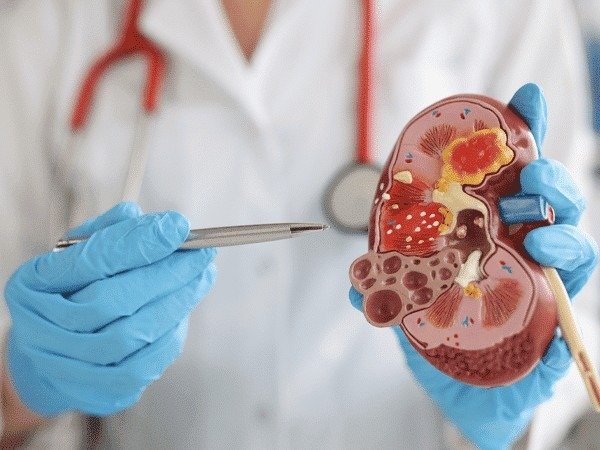
Kidney stones can cause severe pain, difficulty urinating, nausea, blood in the urine, and other urinary problems. When a stone does not pass naturally or requires active treatment, RIRS Procedure for Stone Removal in Narela can be an effective minimally invasive option for selected patients. RIRS stands for Retrograde Intrarenal Surgery, a procedure in which a thin, flexible instrument is passed through the natural urinary passage to reach the kidney and treat stones, usually with laser energy.
For fast information, directly chat with us on WhatsApp.
Unlike traditional open surgery, RIRS does not require a large incision on the skin. Modern flexible ureteroscopy and laser technology allow urologists to access many areas of the kidney and break stones into smaller fragments or dust.
How Does the RIRS Procedure Work?
During RIRS, the urologist guides a small flexible ureteroscope through the urethra and bladder into the ureter and kidney. Once the stone is located, laser energy can be used to fragment it into smaller pieces. Some fragments may be removed using a small basket, while fine particles can pass naturally through the urine.
A temporary ureteric stent may sometimes be placed after the procedure to help urine drain properly while the urinary tract heals. Whether a stent is required depends on the stone, procedure, and individual patient factors.
Benefits of RIRS Procedure for Stone Removal in Narela
1. Minimally Invasive Treatment
One of the major advantages of the RIRS Procedure for Stone Removal in Narela is that it is performed through the natural urinary passage. There is generally no large external incision, which can make the treatment less invasive than procedures that require access through the skin.
This approach can also reduce concerns related to wound healing and visible surgical scars.
2. Effective Laser Stone Fragmentation
RIRS uses modern laser technology to break kidney stones into smaller fragments or fine particles. Laser treatment gives the urologist precise control while working inside the urinary tract.
The ability to fragment stones into small pieces can help facilitate their removal or natural passage after treatment. Laser technology is now widely used for endoscopic stone treatment.
3. Access to Difficult Kidney Stone Locations
Kidney stones can develop in different parts of the kidney, including areas that may be difficult to reach using some other treatment approaches. The flexible nature of the ureteroscope allows the urologist to navigate through the urinary tract and reach various kidney areas.
This is particularly useful when stone location, anatomy, or other patient-specific factors make another treatment less suitable.
4. No Large Surgical Incision
Because RIRS is performed through the urinary tract, it does not require the type of kidney access incision used in percutaneous procedures. This can be an important consideration for patients looking for a minimally invasive approach.
For appropriately selected stones, endoscopic procedures such as RIRS can provide effective stone treatment without conventional open surgery. Current stone-management guidance considers ureteroscopy among the active treatment options, depending on stone size, location, symptoms, and patient factors.
5. Potentially Faster Recovery
Many ureteroscopic stone procedures can be performed as day-case or short-stay treatments. Modern endoscopic techniques have reduced the need for prolonged hospital stays compared with older surgical approaches.
The exact recovery period varies depending on stone size, number of stones, the complexity of the procedure, and the patient’s overall health.
6. Useful for Selected Multiple or Complex Stones
RIRS may be considered when a patient has multiple stones or when factors such as stone position make other treatments less suitable. However, the most appropriate treatment cannot be decided based on stone size alone.
A urologist may evaluate imaging reports, stone location, stone burden, urinary anatomy, previous treatments, kidney function, and other health conditions before recommending RIRS.
7. Can Reduce the Need for Open Stone Surgery
Advances in flexible ureteroscopes and laser technology have significantly expanded the role of minimally invasive stone treatment. Modern endoscopic treatment can manage many upper urinary tract stones without traditional open surgery.
This is one reason why patients with kidney stones are often evaluated for minimally invasive options before more invasive surgery is considered.
Who May Need RIRS for Kidney Stones?
The RIRS Procedure for Stone Removal in Narela may be recommended for selected patients when active stone treatment is required. It may be considered when:
- The stone is unlikely to pass naturally.
- Kidney stones are causing persistent or severe symptoms.
- A stone is causing urinary obstruction.
- Previous stone treatment has not provided adequate clearance.
- Stone location makes RIRS a suitable option.
- Multiple stones require endoscopic treatment.
- The patient has anatomical or clinical factors that affect the choice of treatment.
Treatment decisions should always be individualized. Depending on the size and location of the stone, options can include observation, shock wave lithotripsy, ureteroscopy/RIRS, or percutaneous nephrolithotomy.
RIRS vs Other Kidney Stone Treatments
Kidney stone treatment is not the same for every patient. Smaller stones may sometimes be monitored if they have a reasonable chance of passing naturally and the patient has no infection, kidney impairment, or uncontrolled symptoms.
Shock wave lithotripsy (SWL) uses focused shock waves to break stones from outside the body. Ureteroscopy and RIRS use an endoscope to directly reach and treat the stone. Percutaneous nephrolithotomy (PCNL) involves creating a small access route into the kidney and is generally used for larger or more complex stone burdens.
Therefore, choosing between RIRS, SWL, PCNL, or observation should be based on medical assessment rather than simply selecting the newest procedure.
What to Expect After RIRS?
After the RIRS Procedure for Stone Removal in Narela, some patients may experience mild discomfort, urinary frequency, burning during urination, or a small amount of blood in the urine, particularly if a temporary ureteric stent has been placed.
Your doctor may recommend medicines, adequate fluid intake where appropriate, follow-up imaging, and stent removal at the advised time. Recovery instructions can vary depending on the procedure and individual health condition.
It is also important to understand that removing a kidney stone treats the existing stone but does not necessarily prevent future stones. Stone analysis and, in selected patients, metabolic evaluation can help identify factors contributing to recurrent stone formation.
Why Choose Expert Evaluation for RIRS?
Choosing the right kidney stone treatment requires more than identifying the presence of a stone. The urologist needs to consider its size, number, location, density, urinary anatomy, symptoms, kidney function, and medical history.
If you are considering the RIRS Procedure for Stone Removal in Narela, a specialist evaluation can help determine whether RIRS is appropriate for your particular condition. Proper diagnosis and treatment planning can help improve safety and the likelihood of successful stone clearance.
Conclusion
RIRS has become an important minimally invasive option for treating selected kidney stones. The key benefits include access through the natural urinary passage, precise laser fragmentation, no large external incision, treatment of stones in challenging kidney locations, and the possibility of a relatively quick recovery.
However, the RIRS Procedure for Stone Removal in Narela is not automatically the best treatment for every kidney stone. Stone size, location, number, symptoms, kidney function, anatomy, and previous treatments all influence the decision.
If kidney stones are causing repeated pain, urinary problems, obstruction, or other complications, consult a qualified urologist for an appropriate evaluation. At KD Hospital, patients can discuss their condition with a specialist and understand whether RIRS or another stone-treatment approach is suitable for their individual needs.